
Full Day Charter from Fajardo to Culebra
Your own boat for up to six from Sunbay Marina: four hours at Culebra, lunch aboard.
From $1,520 per group, up to 6
Check AvailabilityCulebra is warm all year, so the weather that matters is the sea. Here is what wind, swell and rain do to a boat day, each month in numbers, and how to book so the weather cannot cost you. It is the planning page for any boat tour to Culebra.
Every tour starts with a crossing of 50 to 90 minutes over open water. Wind and swell decide how that feels, and they decide where you go. Every boat keeps the captain's right to change the route, and the named alternatives are Icacos, Palomino and Vieques.
The National Weather Service issues a Small Craft Advisory for winds of 20 to 33 knots or seas that are hazardous to small boats. On those days a crossing to Culebra is unlikely. Captains also decide on lesser days, so the call is made at the dock that morning.
Rain matters less. Showers here are often short, and you are wet anyway. What you control is the booking: take free cancellation, which every tour offers up to 24 hours ahead. The planning page lists what each fare does when a crossing is called off.
A rough sea can change the plan on the day. Book a fare with free cancellation, check the marine forecast two days out, and see what a diversion to Icacos means.
The temperatures below are the 1991–2020 NOAA normals for Roosevelt Roads in Ceiba, the ferry port, because no temperature normals exist for Culebra itself. The rain figures are Culebra's own, from the Culebra Hill station.
One of the three driest months, with about 2.2 in (57 mm) of rain on Culebra Hill. Highs average 82.9 °F (28.3 °C) and lows 71.4 °F (21.9 °C). Winter cold fronts can make the crossing rough, so book with free cancellation and check the forecast two days out.
Still dry, at about 2.4 in (61 mm) of rain, and the air is at its mildest: highs of 83.5 °F (28.6 °C), lows of 71.4 °F (21.9 °C). This is high season, and the shared boats fill early. Book your seat as soon as your dates are firm.
The driest month on Culebra Hill, at about 2.2 in (56 mm). Highs reach 84.2 °F (29.0 °C). Spring-break weeks fill the big catamarans, so a smaller power boat or a private charter keeps your day calmer. Pack a light layer for the ride back.
Dry and warming, with 2.9 in (73 mm) of rain and highs of 85.9 °F (29.9 °C). Lows rise to 73.3 °F (22.9 °C), so an early start feels comfortable. The winter fronts usually ease this month. It is a good month for a first snorkel.
The first real rain, about 4.4 in (112 mm), often in short showers. Highs are 86.7 °F (30.4 °C) and lows 75.4 °F (24.1 °C). Hurricane season has not started yet. A wet ride back is warm this month, but pack a dry bag for your phone.
The Atlantic hurricane season opens on 1 June, though June itself has only 3.3 in (85 mm) of rain. Highs reach 88.1 °F (31.2 °C). The sun is strong from mid-morning, so a rash guard and reef-safe sunscreen matter more than a jacket.
Hot, at 88.8 °F (31.6 °C) by day and 77.3 °F (25.2 °C) at night, with 3.5 in (88 mm) of rain. School holidays fill the shared boats. Book early, and pick a boat with shade if you burn easily; the catamarans have covered cabins.
The warmest month, with highs of 89.1 °F (31.7 °C) and 4.1 in (103 mm) of rain. The hurricane season's busiest stretch begins in mid-August. Book with free cancellation, watch the forecast in the week before your trip, and keep a spare day in your plans.
The heart of the hurricane season, which peaks around 10 September, and wetter at 5.9 in (149 mm). Highs stay near 88.8 °F (31.6 °C). Boats run on good days, but a storm or its swell can cancel them, so keep your plans flexible.
Still in the hurricane season's peak until mid-month, with 5.5 in (141 mm) of rain. Highs are 88.3 °F (31.3 °C). The boats are quieter than in summer. Book with free cancellation, and keep a spare day in your plans if you can.
The wettest month on Culebra Hill, at 6.2 in (158 mm), and the last of the hurricane season, which ends on 30 November. Highs ease to 86.2 °F (30.1 °C). Showers come and go, so bring a light rain layer.
Drier again, at 3.0 in (76 mm), with highs of 84.1 °F (28.9 °C) and lows of 72.8 °F (22.7 °C). The holiday weeks are busy on every boat, so book ahead. Winter fronts return, and your captain may choose a calmer beach.
| Season | Highs | Rain a month | What it means for you |
|---|---|---|---|
| Dry winter (January to April) | 82.9 – 85.9 °F | 2.2 – 2.9 in | The driest months and the busiest boats; cold fronts can roughen the crossing |
| Early summer (May to July) | 86.7 – 88.8 °F | 3.3 – 4.4 in | Warm water and strong sun; hurricane season opens on 1 June |
| Peak storm season (August to October) | 88.3 – 89.1 °F | 4.1 – 5.9 in | The hurricane season's busiest weeks; book with free cancellation |
| Late autumn (November and December) | 84.1 – 86.2 °F | 3.0 – 6.2 in | November is the wettest month; holiday weeks fill the boats |
If you want the driest day, go from January to April and book early. If you want quieter boats, go in October or November, and keep a spare day. The beaches page shows which sheltered beaches the captains fall back on.
Every tour here leaves in the morning, between about 8:00am and 9:00am, and comes back in the afternoon. So you do not choose the hour; you choose what to do with the midday sun.
The sun is strongest from late morning to mid-afternoon, which is exactly when you are on the beach. Wear a rash guard and a hat, and reapply sunscreen after every swim. If you stay on the island, the refuge trails open at 6am, before the heat; getting there covers the ferry and flights for a longer stay.
The monthly figures are NOAA's 1991–2020 climate normals; the hurricane season is NOAA's; the advisory wording is the National Weather Service's.
Your own boat for up to six from Sunbay Marina: four hours at Culebra, lunch aboard.
From $1,520 per group, up to 6
Check Availability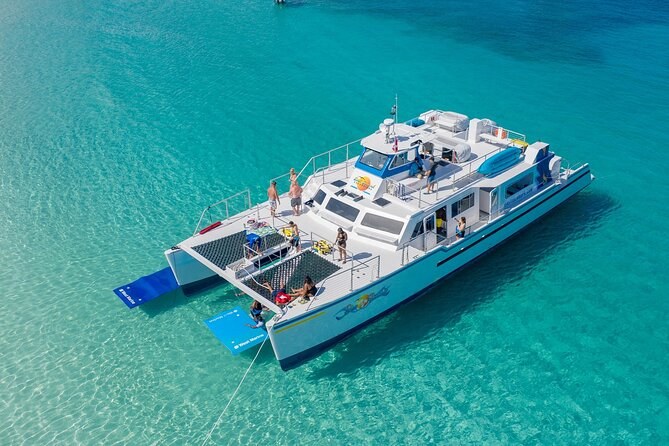
A catamaran beach day from Puerto del Rey with kayaks and paddleboards; snorkel gear is not included.
From $195 per person
Check Availability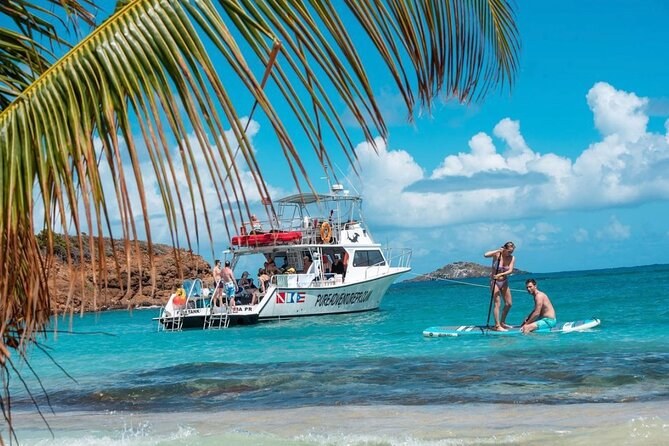
About five hours at Flamenco Beach, with a marine biologist aboard and paddleboards.
From $168 per person
Check AvailabilityHow to book around the storm season is in the hurricane-season guide, and every tour is compared on Culebra Tours.