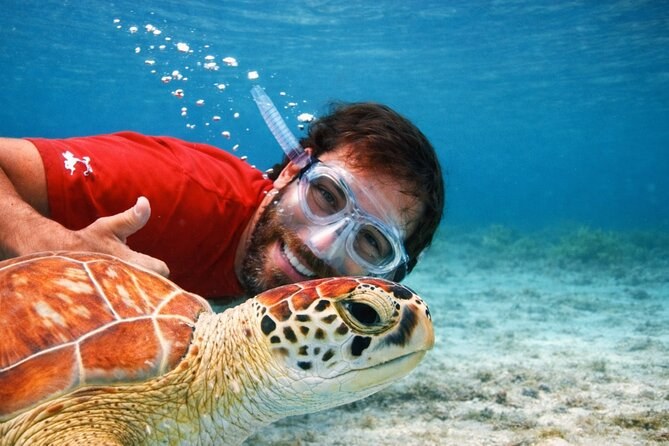
Culebra Snorkel with Turtles & Flamenco Beach Adventure by Ferry
The public ferry with a guide: turtles at Tamarindo, then three hours at Flamenco Beach.
From $145 per person
Check AvailabilityCulebra's beaches split into two kinds: long sand for a beach day, and reef beaches where the snorkeling is. Here is each one, what you find there and which boat gets you there, so you can match the Culebra boat tour to the day you want.
Most boats plan for two stops. First comes a reef, where you snorkel for an hour or more. Then comes a beach, where you swim, eat and lie on the sand for two to five hours. The captain picks both on the day, by the wind and the swell.
That makes the list below a set of possibilities, not a promise. When the crossing is too rough, the boats turn for Icacos, Palomino or Vieques, and you still get a reef and a beach. The ferry day and the Ceiba snorkel boat are the two days built around Flamenco Beach.
Flamenco Beach is the one people come for: a long curve of white sand around a bay on the north coast. It is a beach for swimming, floating and lying on the sand rather than for reef snorkeling, and the day tours that come here give you hours on it.
At the water's edge sits a rusting tank covered in graffiti, left from the decades when the U.S. Navy trained on the Flamenco Peninsula. The Navy left in 1975. The peninsula behind the beach is refuge land, where more than 30,000 pairs of sooty terns nest.
Food kiosks sell lunch and drinks at Flamenco, so bring cash. The ferry day gives you three hours here, with entry included, and the Ceiba snorkel boat about five. If you want Flamenco for sure, pick one of those two days.
Tamarindo is a small beach on the west coast, on the channel that faces Cayo Luis Peña. It is where the boats go to look for sea turtles, and where the ferry day's two-hour guided snorkel happens, with a flotation belt for every swimmer.
The private days also stop here to look for turtles. Give them room when you do: float still, keep your hands to yourself and let each turtle decide how close it comes.
Carlos Rosario is a west-coast beach with reef close to the sand. It is one of the spots the power boats name when the captain chooses where to moor for the snorkel. You reach it from the water, and the boat anchors off the reef rather than landing.
Because the stop is the captain's choice, no tour promises it. If you want reef time above all, pick a boat that moors for an hour and a half, such as the Las Croabas power boat.
Melones sits near Punta Melones, the point that marks the southern edge of the Luis Peña reserve. Its reef is rocky and the beach small. Like Carlos Rosario, it is a captain's option rather than a fixed stop.
The channel here is part of a no-take reserve, so fishing is banned and the fish are left alone. Expect reef fish rather than big animals, and keep an eye on the boat's position.
Culebrita is a small island off Culebra's east coast and part of the wildlife refuge. It has beaches of its own and the ruin of an old lighthouse on its hill. Some boats make it the afternoon beach stop when the sea allows.
The Puerto del Rey catamaran often picks Culebrita or Flamenco for the afternoon. The Las Croabas and Isla Verde power boats list the lighthouse on their routes. You swim ashore from the anchorage, so bring water shoes for the rocks.
Resaca and Brava, on the north shore, are the beaches the turtles use to nest. Hawksbill, green and leatherback turtles all use the refuge. The beachfront from the high-tide line to 150 metres inland is protected habitat.
No tour lands on these beaches. If you come back on your own, follow the refuge's signs and its 6am to 6pm hours.
This is where each beach sits and which days are built to reach it. A captain's option can change on the day.
| Beach | Where | What is there | How you get there |
|---|---|---|---|
| Flamenco Beach | North coast, around a wide bay | Long white-sand beach; the painted tank; food kiosks | Culebra Snorkel with Turtles & Flamenco Beach Adventure by Ferry (3 h); Full-Day Snorkeling Tour to Culebra Island with Lunch (5 h); most boats aim for it |
| Tamarindo | West coast, on the Luis Peña channel | Calm water; sea turtles often seen | Culebra Snorkel with Turtles & Flamenco Beach Adventure by Ferry (2 h guided); the private days |
| Carlos Rosario | West coast | Reef close to shore | A captain's option on the power boats |
| Melones | West coast, near Punta Melones | Rocky reef and a small beach | A captain's option on the power boats |
| Culebrita | Off the east coast, in the refuge | Refuge island with beaches and a lighthouse ruin | The catamarans and power boats, when the sea allows |
| Resaca and Brava | North shore | Protected turtle-nesting beaches | No tour lands here |
Pick Flamenco. The ferry day gives three hours and the Ceiba snorkel boat about five, both with lunch nearby.
Pick Tamarindo. The ferry day's guided snorkel and the private days both look for turtles there.
Pick a power boat that moors for an hour and a half, and let the captain choose between Carlos Rosario, Melones and the reserve.
Pick a private boat. The crew chooses a quiet beach and sets up shade while you snorkel.
The refuge, the Navy history and the turtle habitat are the U.S. Fish and Wildlife Service's own statements.
The public ferry with a guide: turtles at Tamarindo, then three hours at Flamenco Beach.
From $145 per person
Check Availability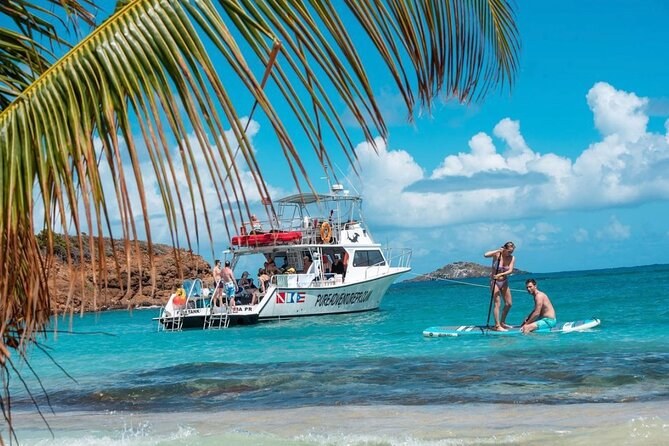
About five hours at Flamenco Beach, with a marine biologist aboard and paddleboards.
From $168 per person
Check Availability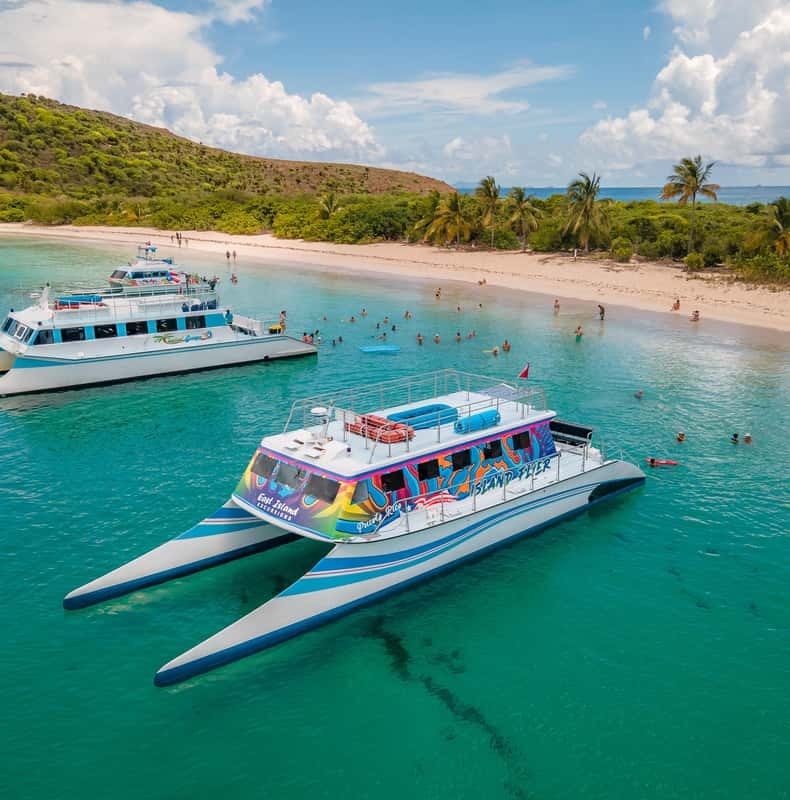
The high-speed catamaran day: a reef snorkel, lunch aboard, then Flamenco or Culebrita.
From $185 per person
Check AvailabilityWhat the island offers beyond its sand is on the attractions page, and every tour is compared on Culebra Tours.